Product domains

Audio depth.
Product breadth.

From the living room to the stage, different listening contexts ask different things of a product.

Listening contexts

Four settings.
Different priorities.

Placement, size, latency and output change what a design must deliver. We start with the constraint that matters most.

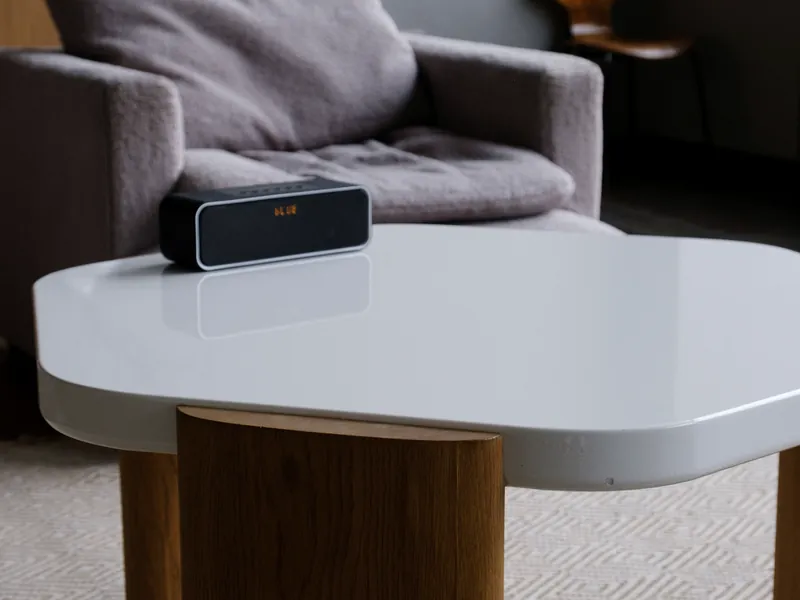
Compact wireless speaker in a quiet modern living room
01 / Home

Home & connected audio

Bass extension and clear speech in a form that belongs in the room. Acoustic volume shares space with antennas, power and controls.

Design balanceRoom-friendly form / Low-frequency output

Smart speakers · Lifestyle audio · Soundbars · Wireless subwoofers

Runner wearing wireless earbuds outdoors
02 / Go

Personal & portable audio

A smaller enclosure leaves less room for everything. Output, battery life and weather protection need to be resolved together—not added one at a time.

Design balanceCompact size / Useful listening time

True wireless earbuds · Headphones · Bluetooth speakers

Vocalist monitoring a recording session in a studio
03 / Work & create

Work & create

Clear speech, low latency and trustworthy monitoring. Connections and controls should support the session without getting between people and their work.

Design balanceFlexible connections / Predictable latency

Conferencing · Studio monitors · Audio interfaces · Microphones

Stage microphone in a live performance environment
04 / Stage

Stage & professional audio

Sustained output under demanding use. Amplification, protection and cooling are developed around the loudspeaker load and the conditions of deployment.

Design balanceSustained output / Thermal headroom

Portable PA · Live-venue PA · Digital mixers · Active and passive loudspeakers

Components & platforms

Useful foundations.
Product-specific decisions.

Transducers and acoustic modules meet power, DSP and connectivity at defined interfaces. We reuse that foundation; the enclosure, controls and performance targets remain specific to the product.

Explore the engineering
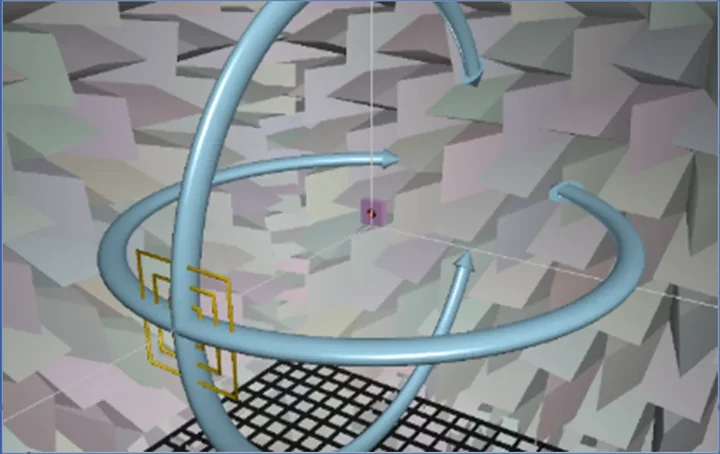
Finite-element acoustic model of the sound field around a loudspeaker enclosure
Engineering reference Acoustic field modelling

Three starting architectures.

Representative platform studies. Configured for each brief.

Portable connected audio

Move from indoor Wi-Fi to outdoor Bluetooth without treating charging, sealing and acoustic loading as separate products.

  1. Wi-Fi / Bluetooth
  2. DSP + amplifier
  3. Acoustic module
Battery + charging → system power
First evidence
Architecture map, power budget and acoustic proof-of-concept plan.

Multiway smart audio

Bring drivers, microphones and connected control together around one acoustic target and one enclosure.

  1. Connected source
  2. DSP + amplification
  3. Multiway drivers
Microphones + controls ↔ signal processing
First evidence
Enclosure model, crossover plan and prototype measurement plan.

Professional power and amplification

Coordinate output, protection and thermal limits across the power supply, amplifier and loudspeaker load.

  1. Audio input
  2. DSP + protection
  3. Power amplifier
Power conversion → amplifier supply
First evidence
Power architecture, protection matrix and thermal test plan.

Architecture studies, not published customer programs or off-the-shelf products. Diagrams show selected interfaces, not complete designs.

How to begin

Bring the product.
Or the problem.

A new brief, a subsystem to integrate, or a question that is holding up the next build. Start with the part you know.

Define a product
Intended use, technical targets and the first architecture.
Integrate a subsystem
Clear interfaces around an acoustic, power or connected module.
Resolve a constraint
A focused model or measurement to guide the next decision.

Useful to share: intended use, current architecture, the main constraint and your timing.